|
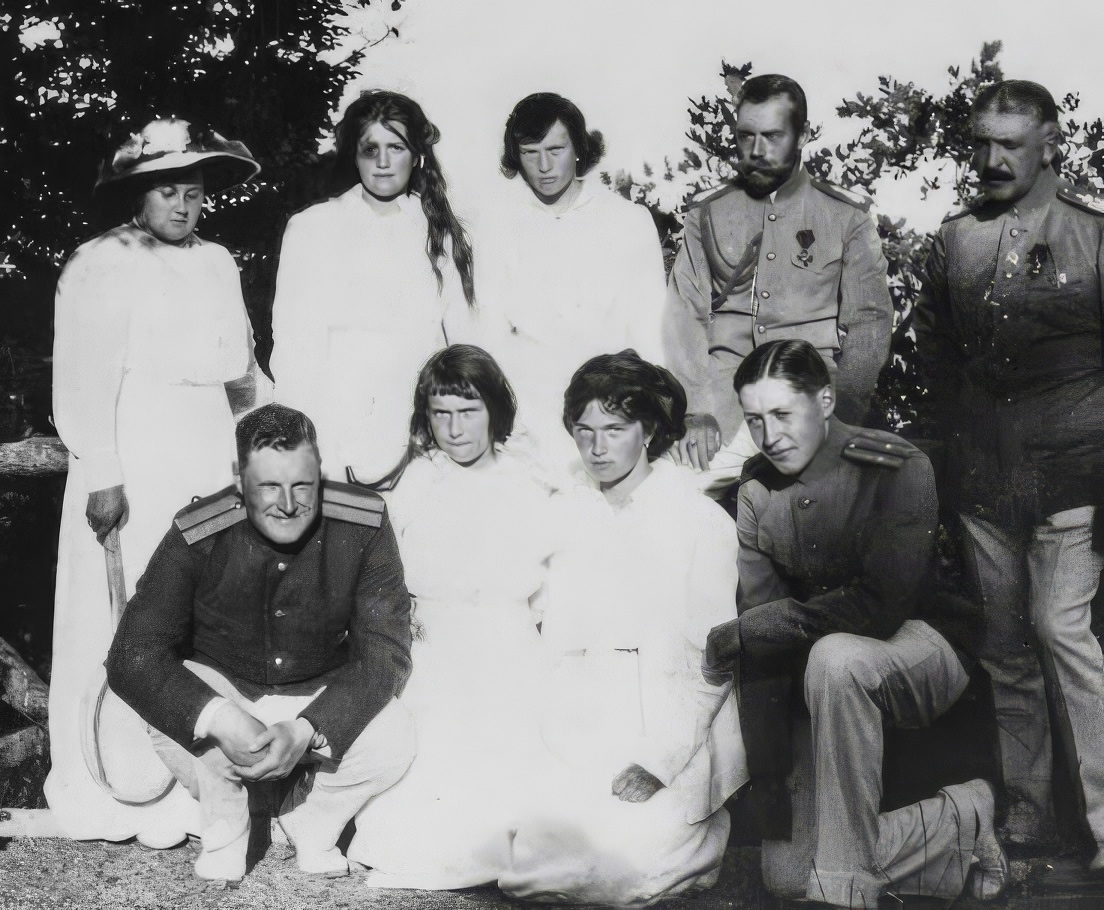
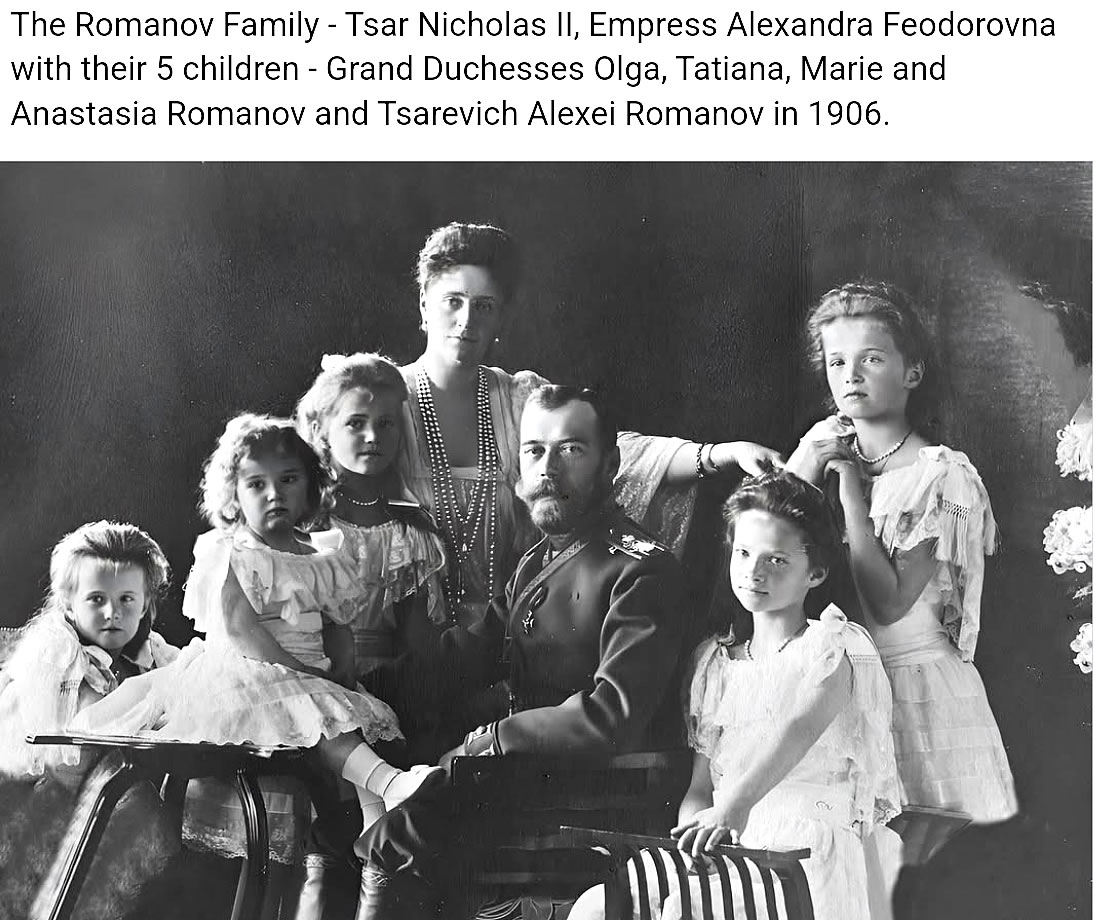
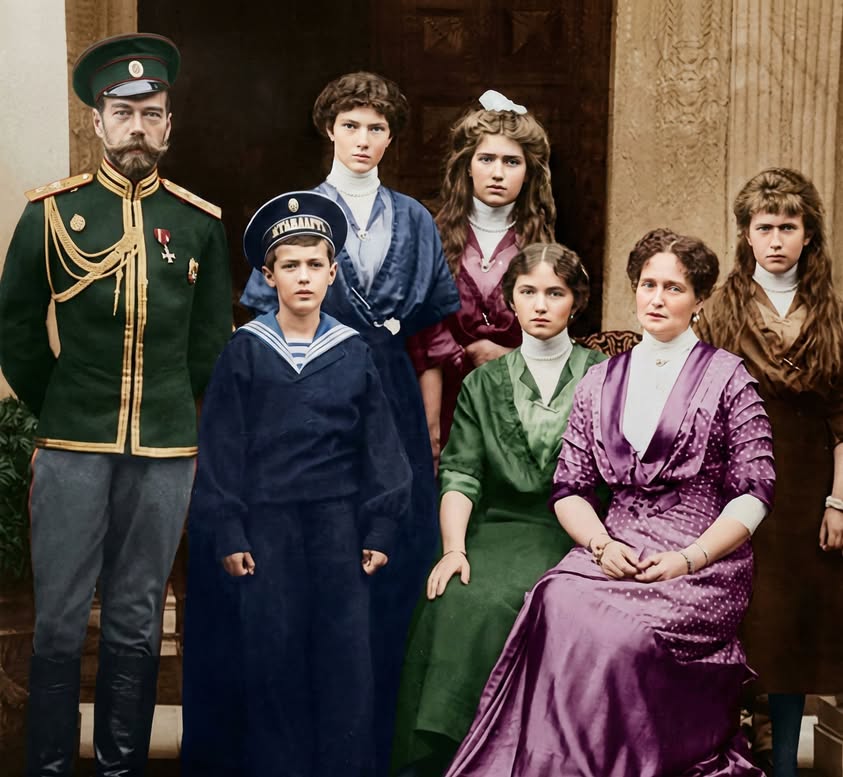
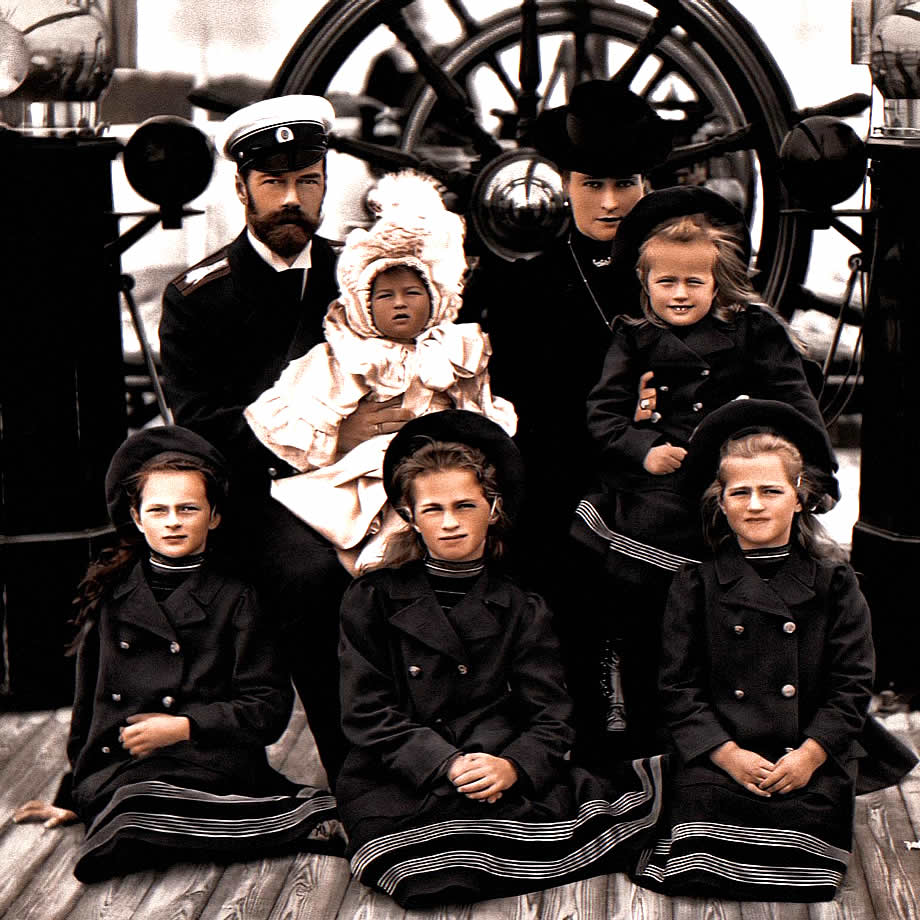
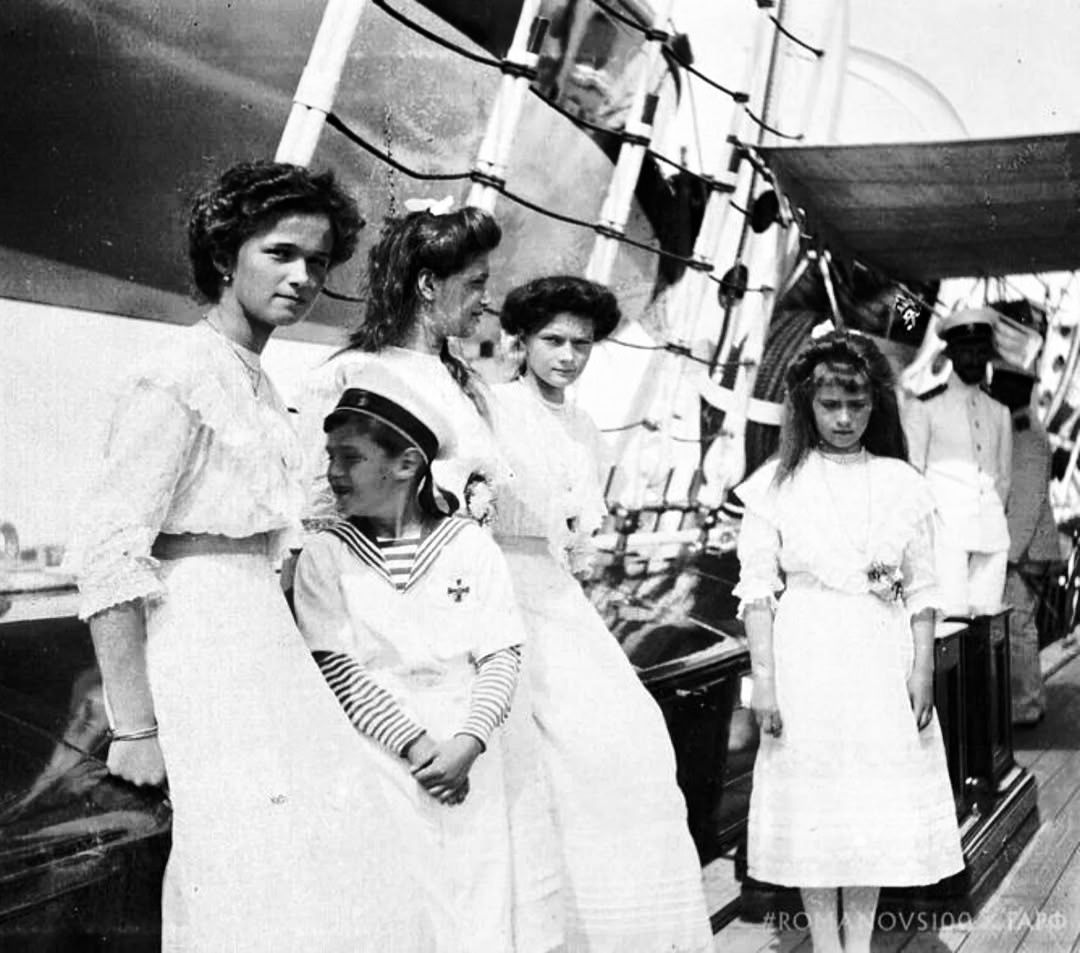
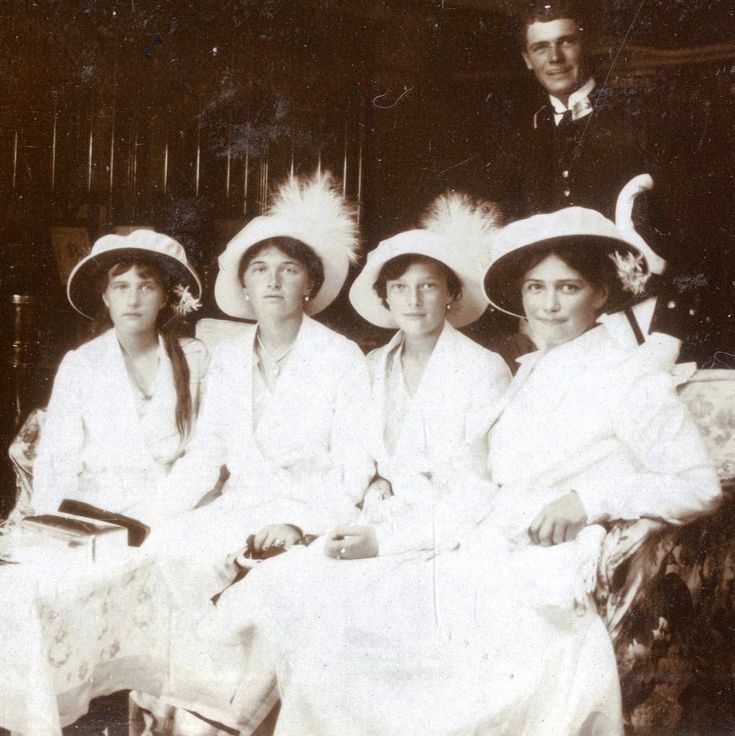
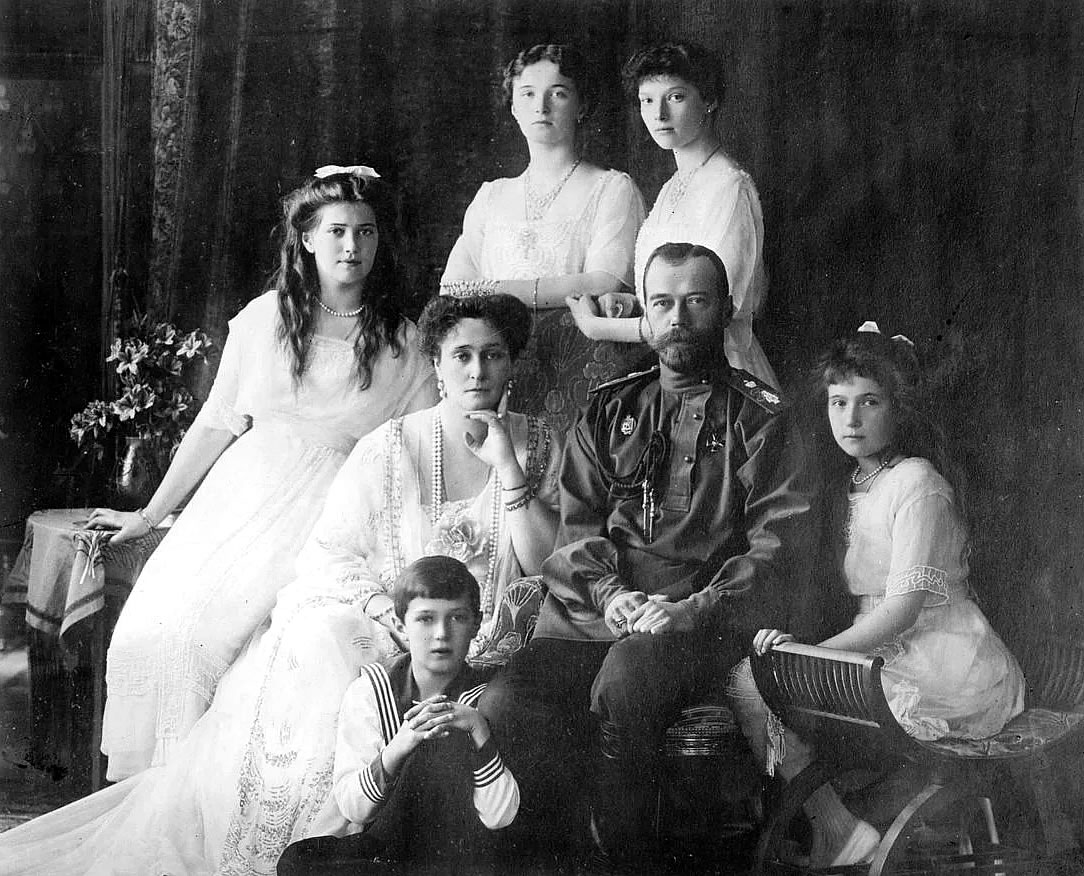
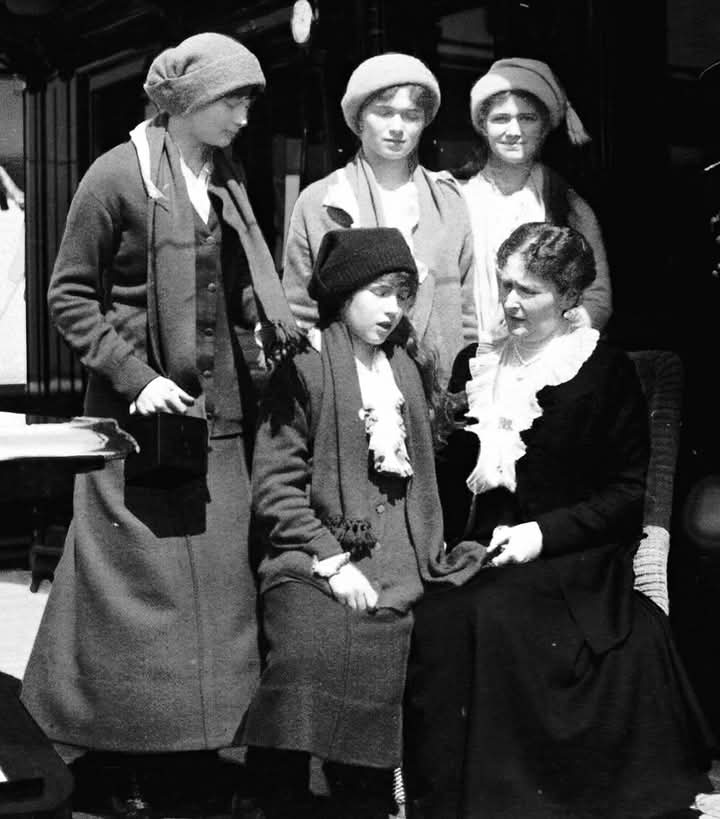
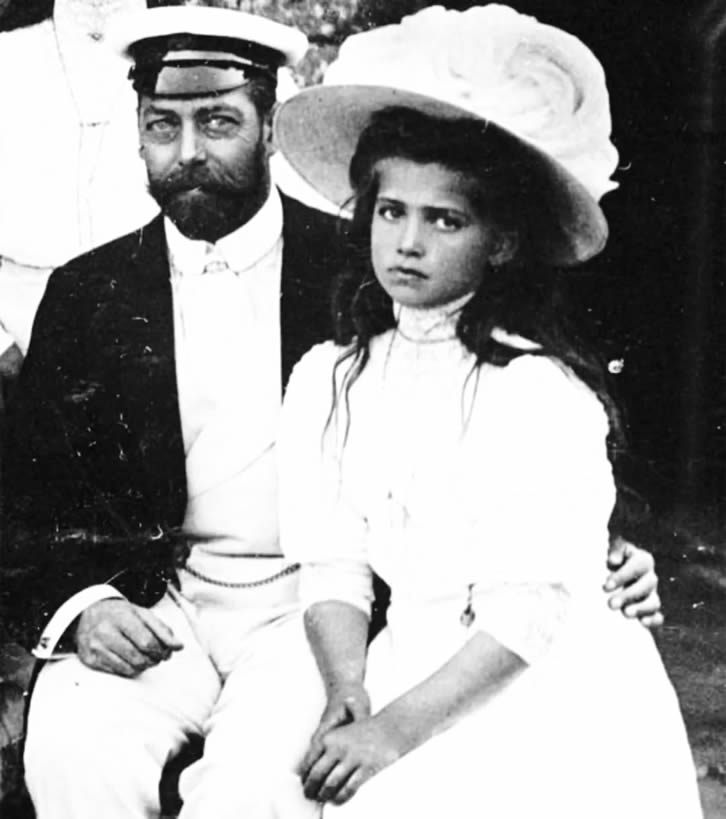
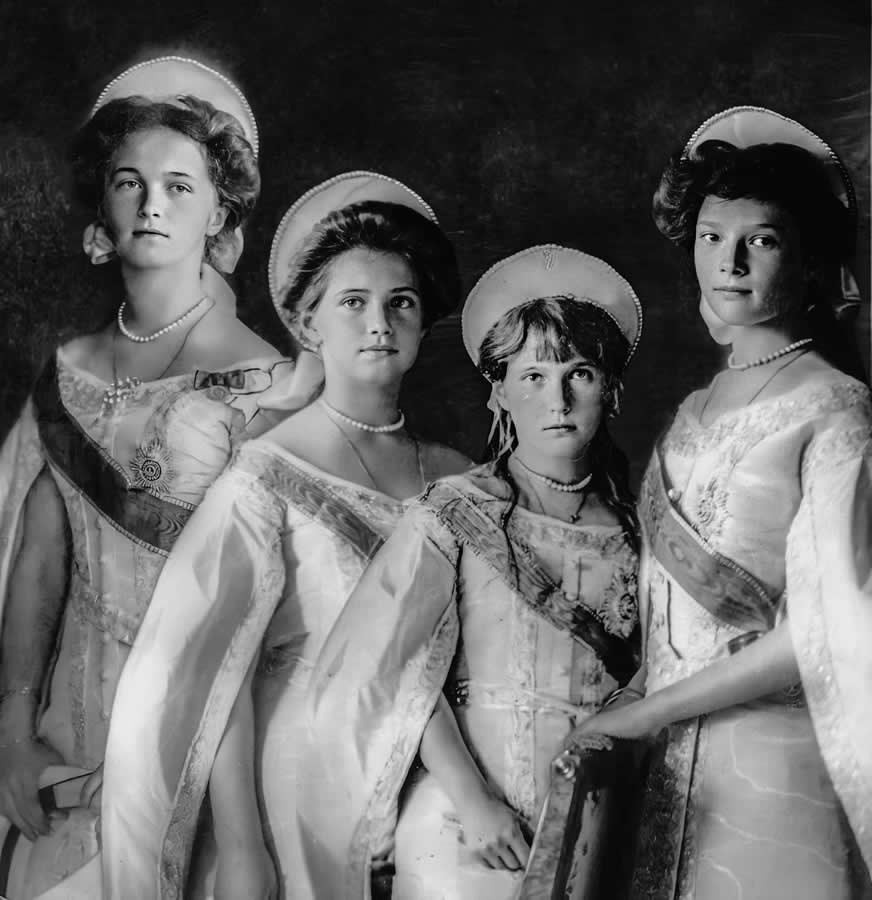
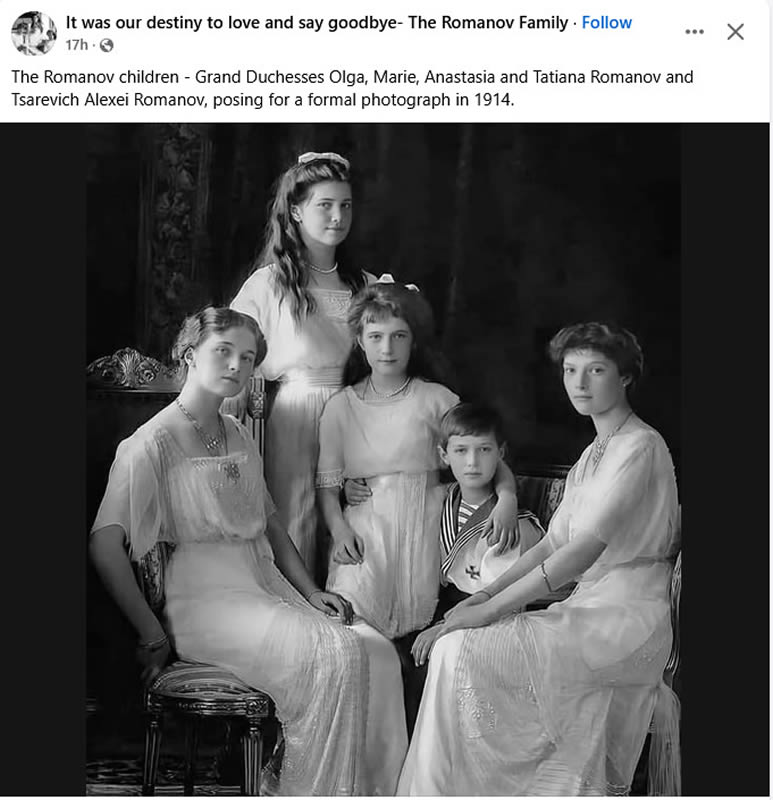
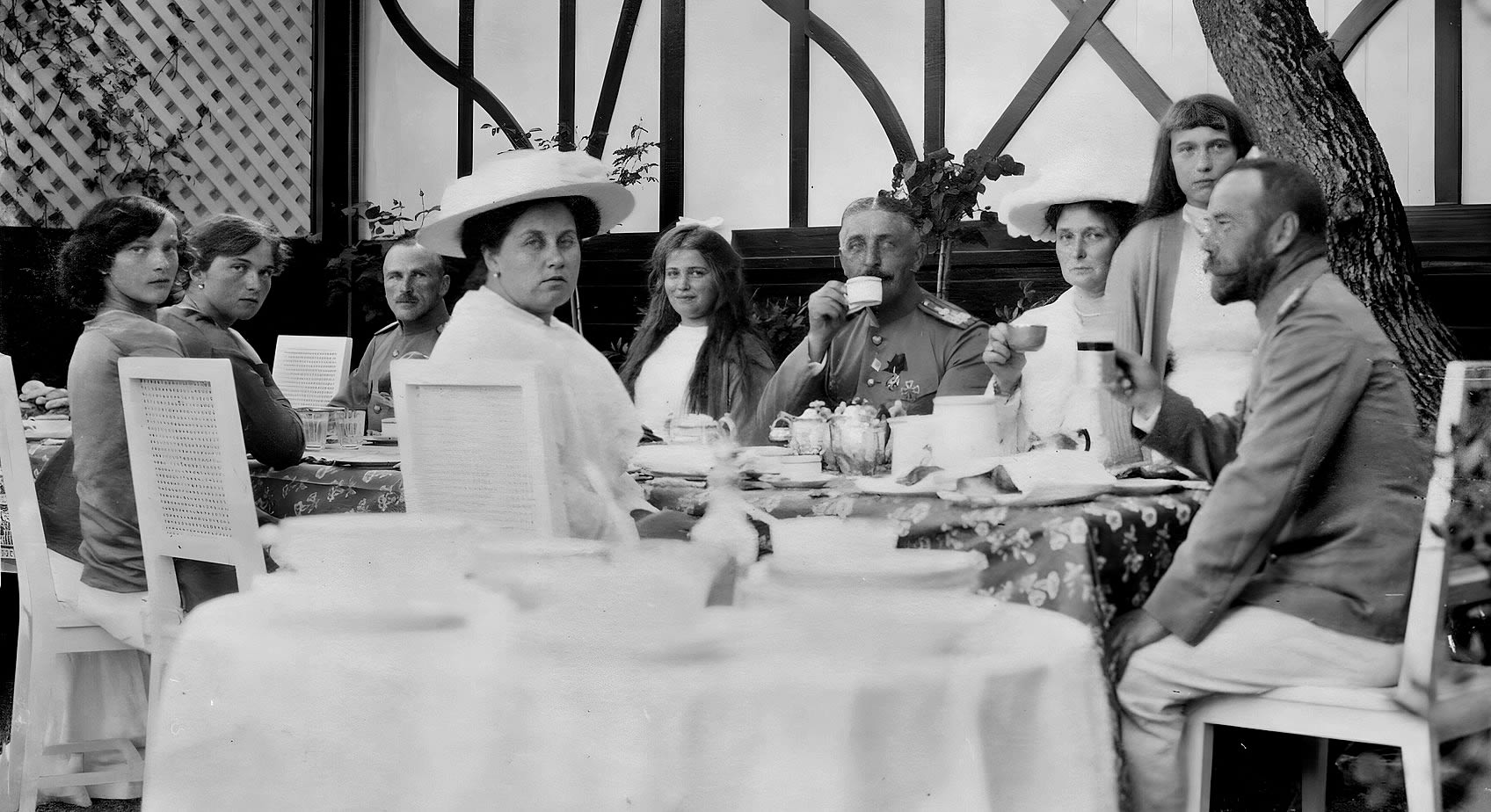
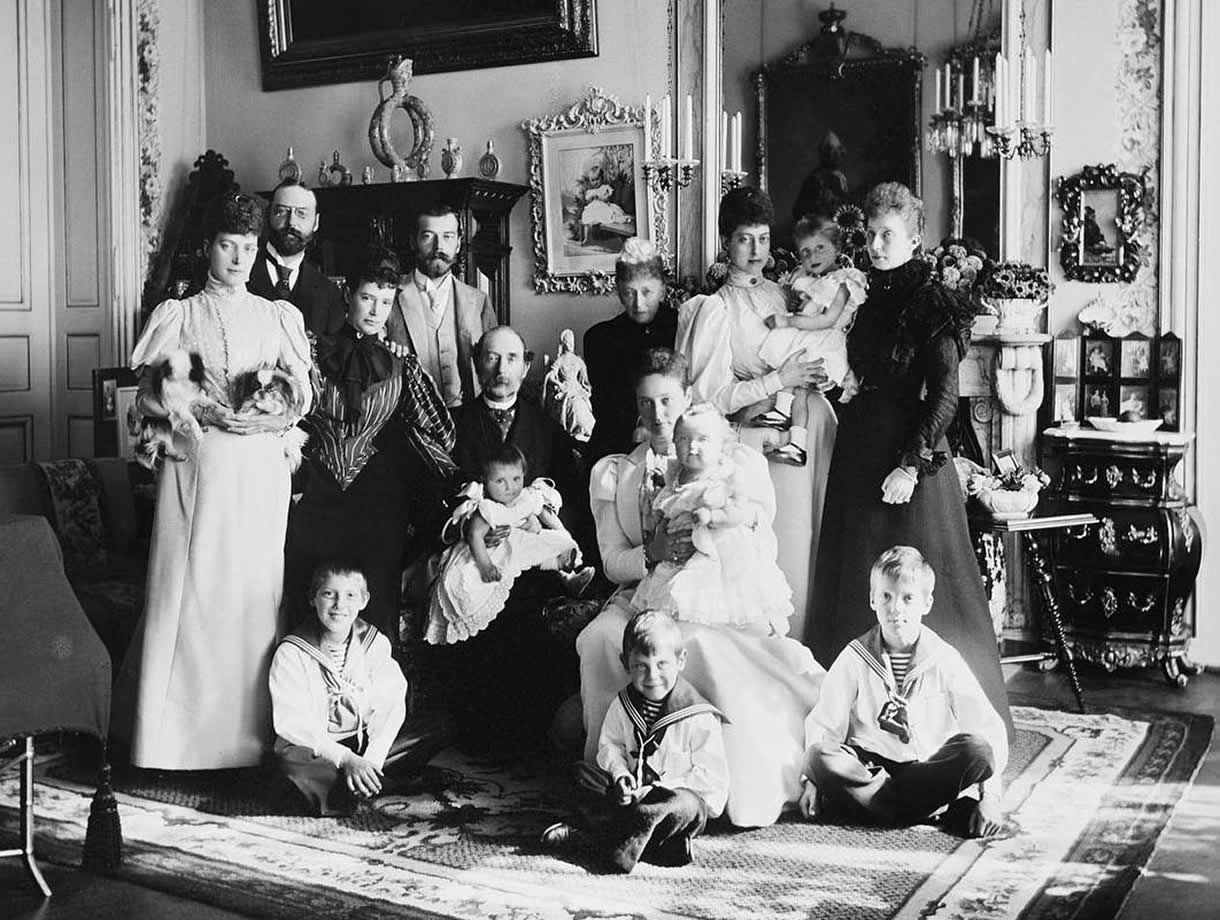
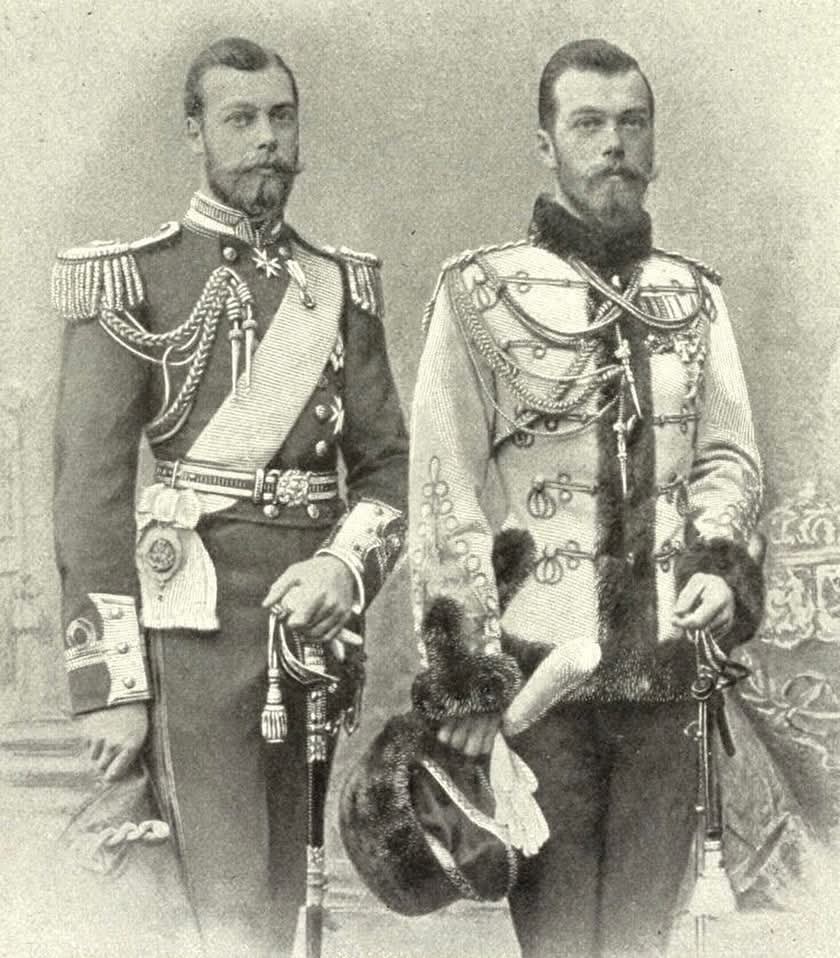
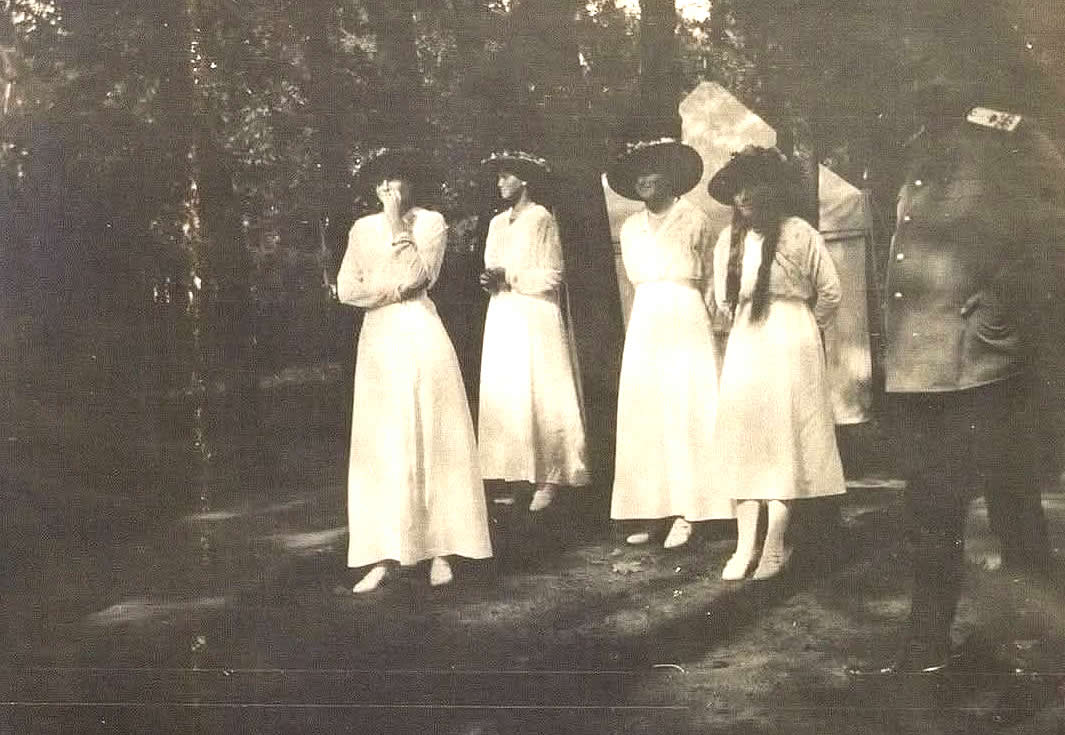
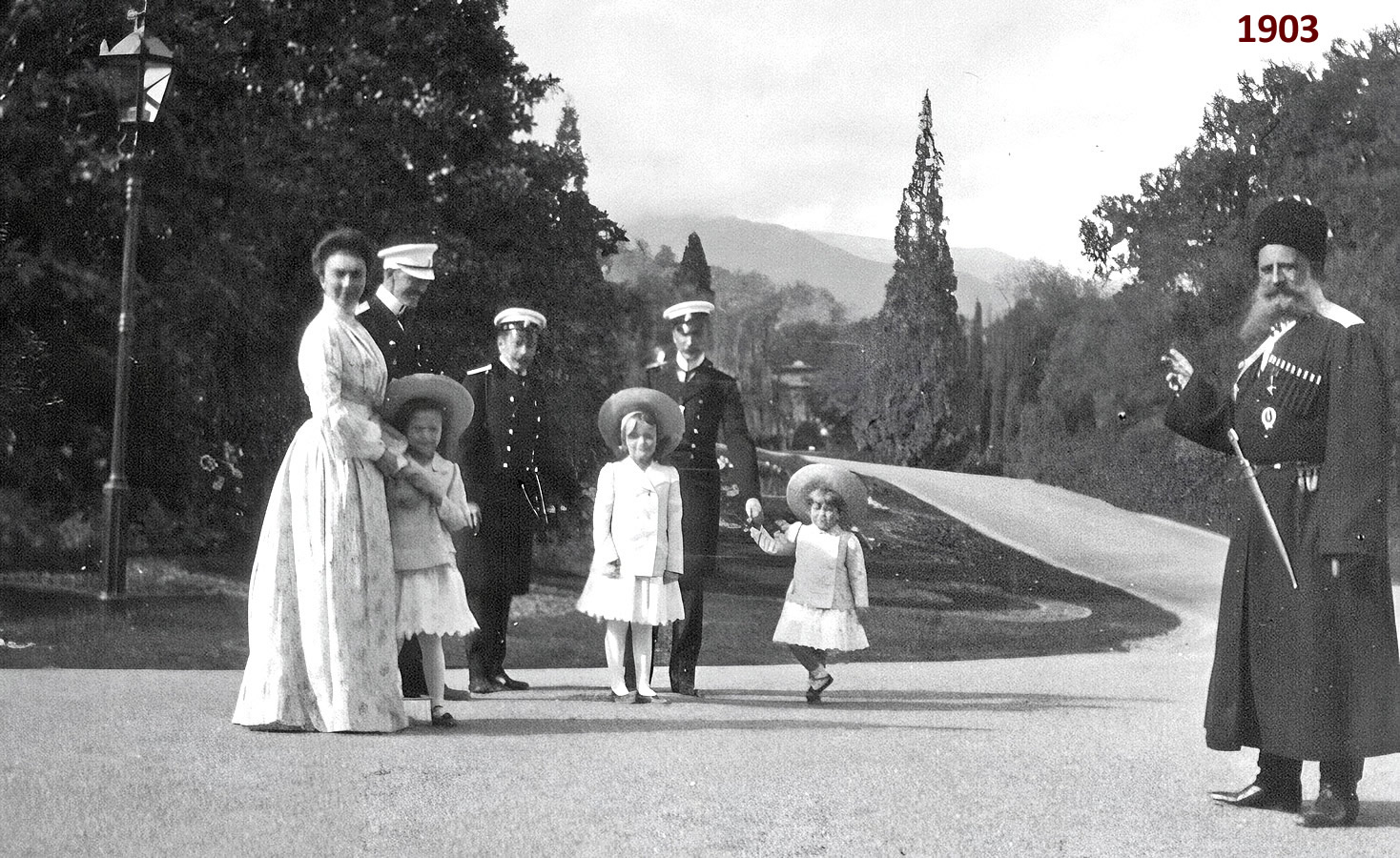
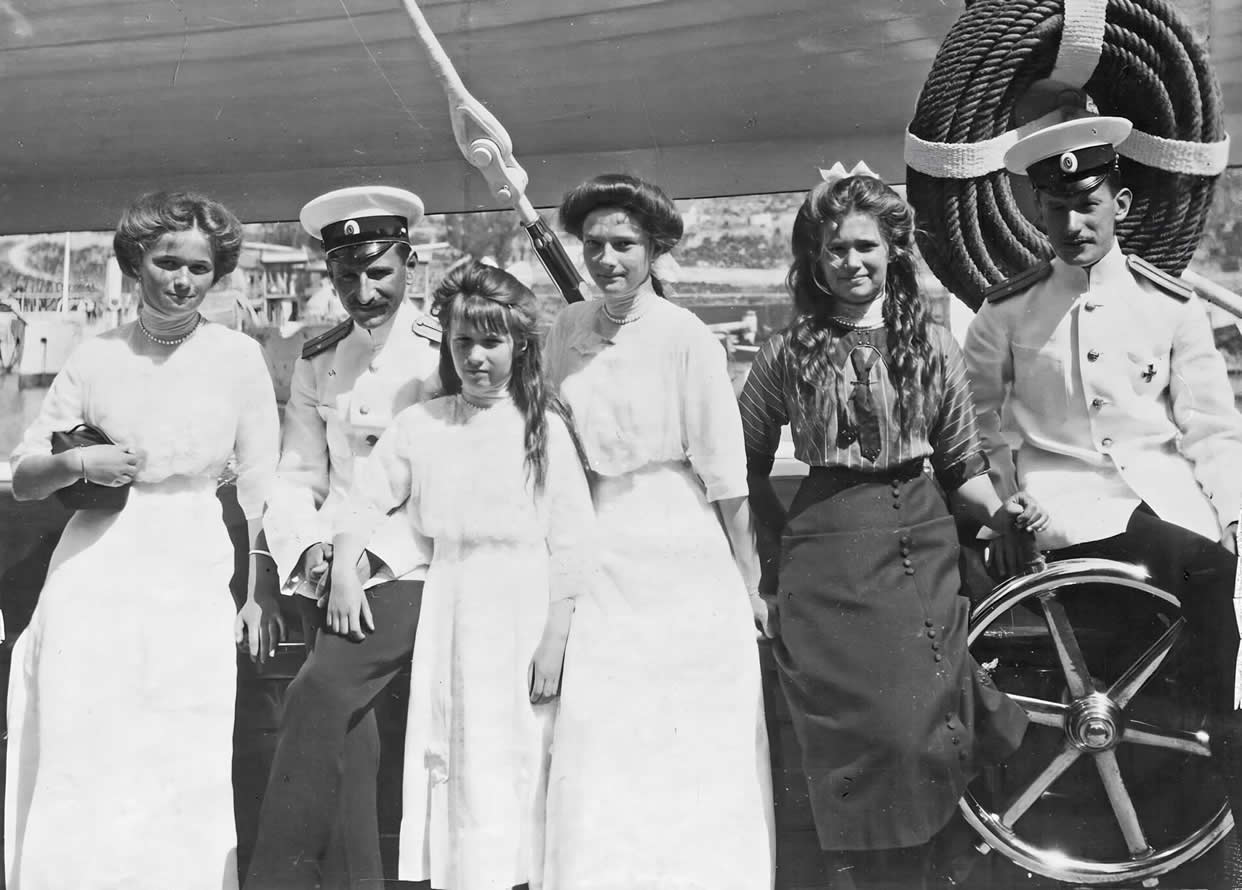
Circa 1914, in the warm glow of a late afternoon at Tsarskoye Selo, a photograph captures Tsar Nicholas II standing with quiet dignity among his family and officers, his military uniform pressed and immaculate, medals catching the pale Russian light. Beside him, his four daughters, Olga, Tatiana, Maria, and Anastasia, stand in matching white dresses, their dark eyes calm and composed, unaware of the storms gathering far beyond the manicured gardens of the Alexander Palace.
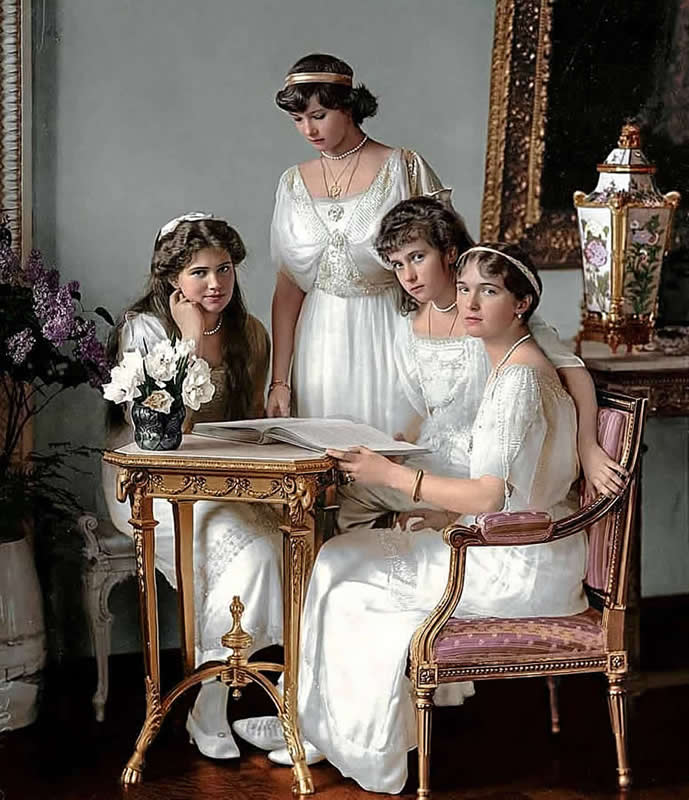
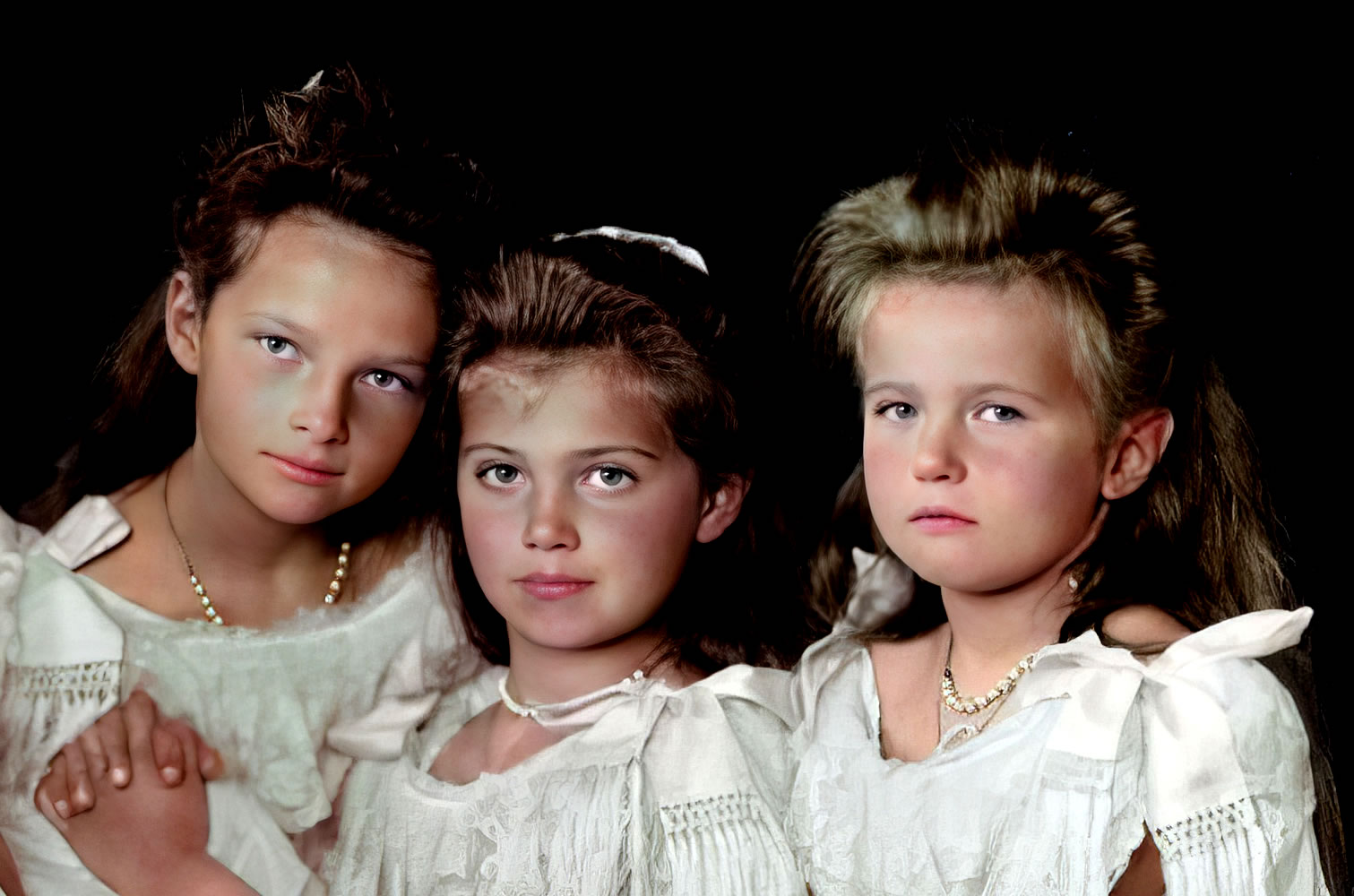
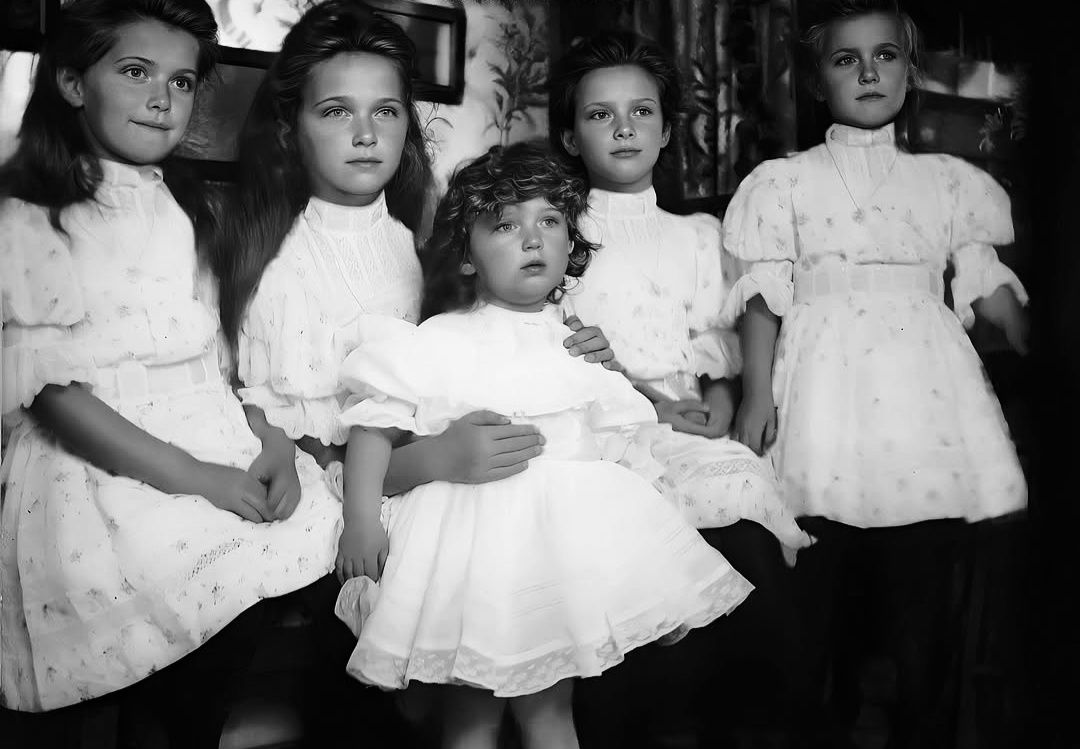
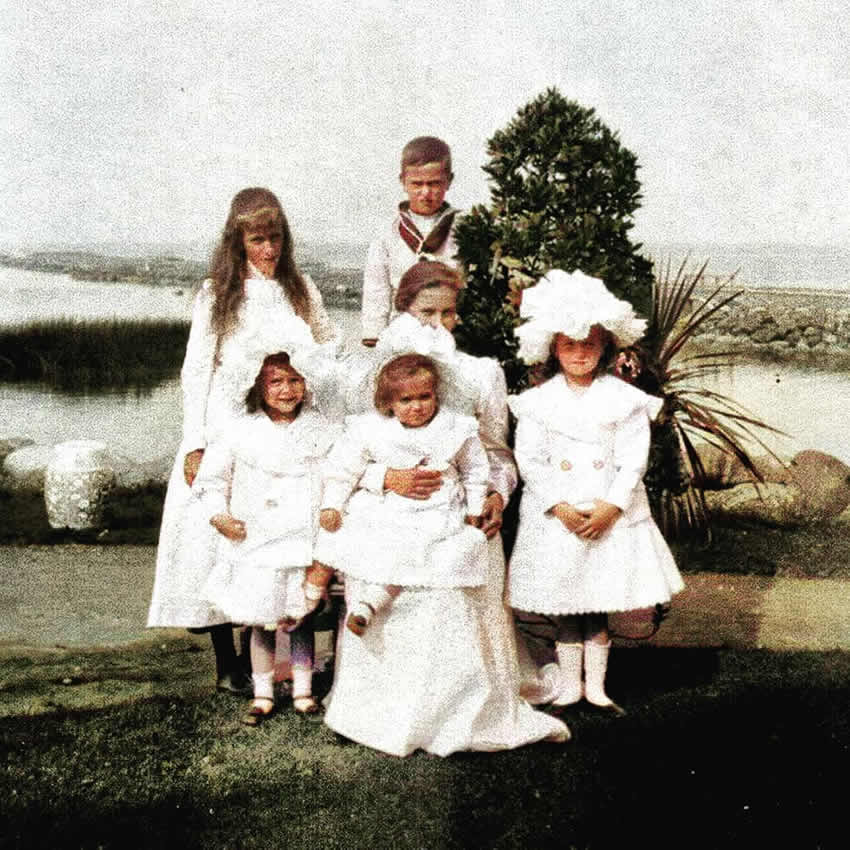
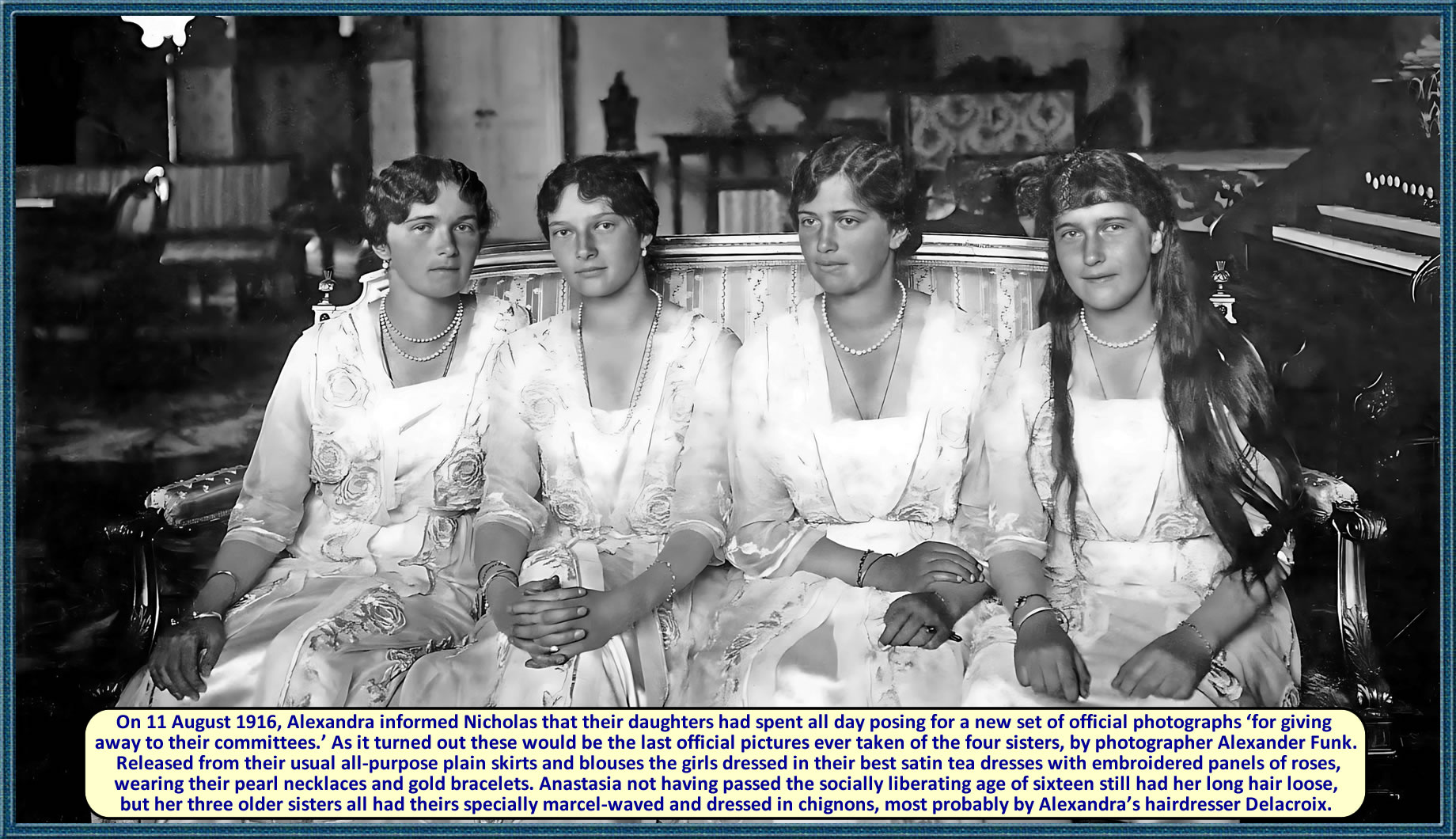
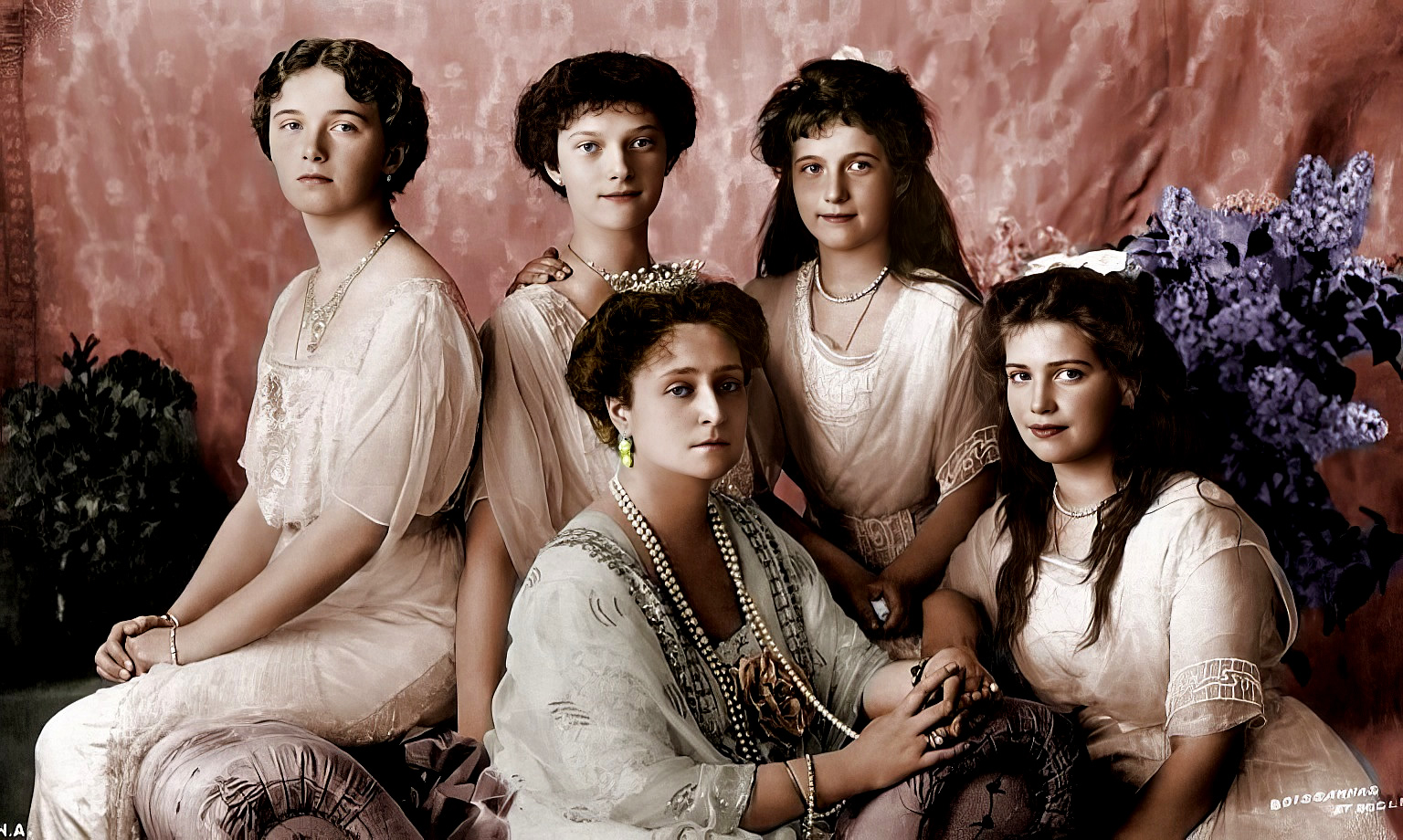
Anna Vyrubova, the devoted confidante of Tsarina Alexandra, hovers nearby in the back row, her expression soft and loyal, a woman woven so deeply into the fabric of the imperial household that her presence in such a photograph felt as natural as the family itself. This was still a world of apparent order and grace, a moment suspended between the grandeur of the Romanov dynasty and the violent transformation that history was already preparing to deliver. The four grand duchesses had invented their own acronym, OTMA, drawn from the first letter of each of their names, a small intimate signal of the extraordinary bond they shared, writing it into diaries and letters as a kind of secret seal of sisterhood. Raised with deliberate simplicity by their parents, they slept on folding army beds, ate modest meals, and learned to sew their own clothes, a discipline meant to shape them into women of genuine character rather than spoiled products of imperial privilege.
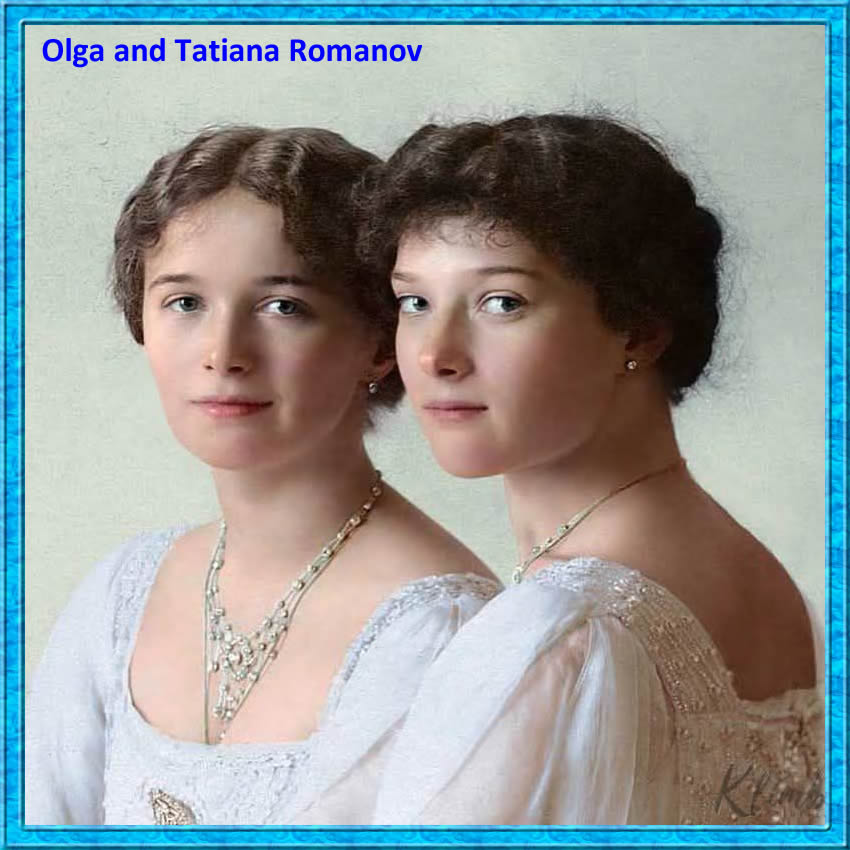
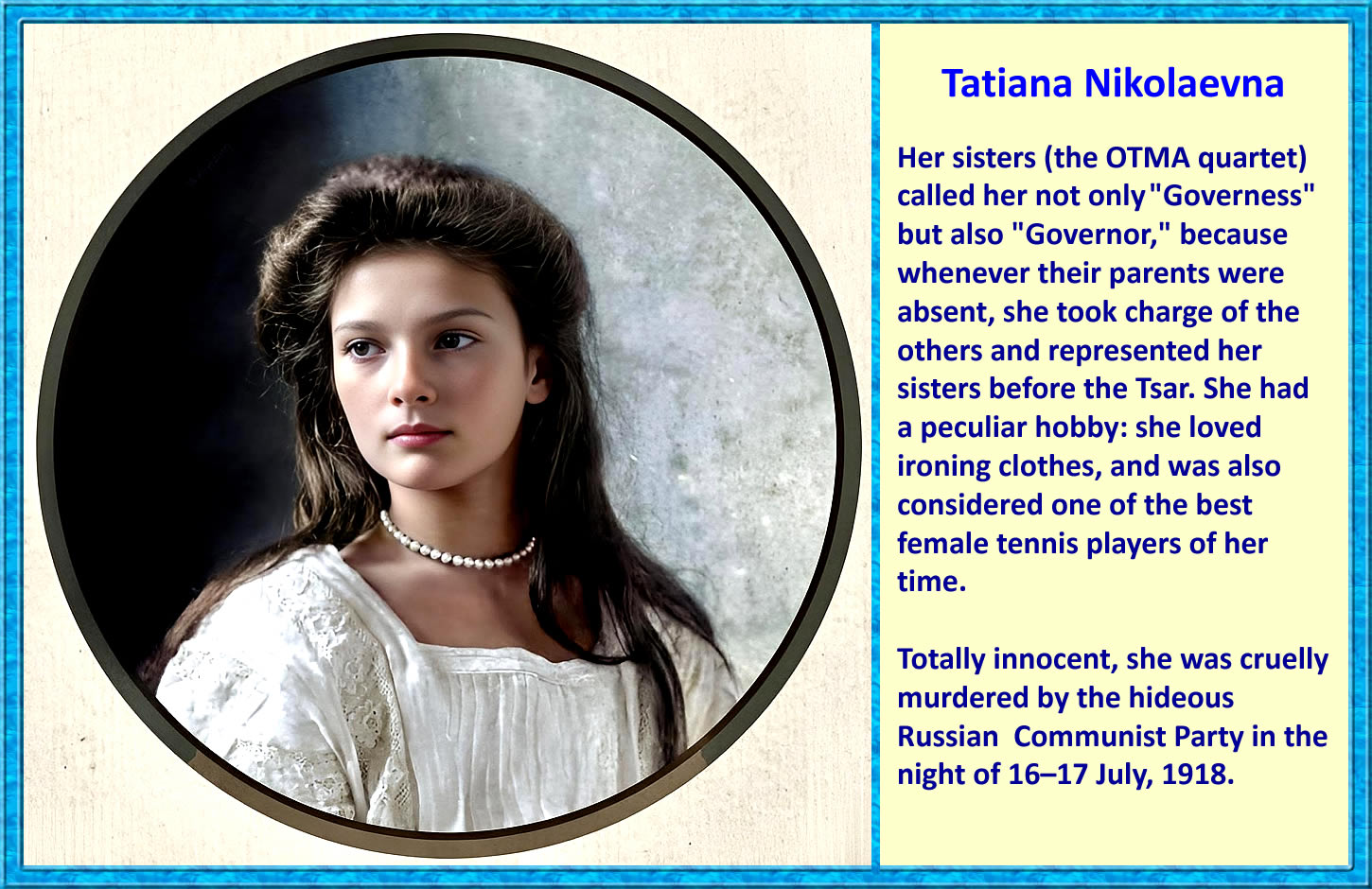
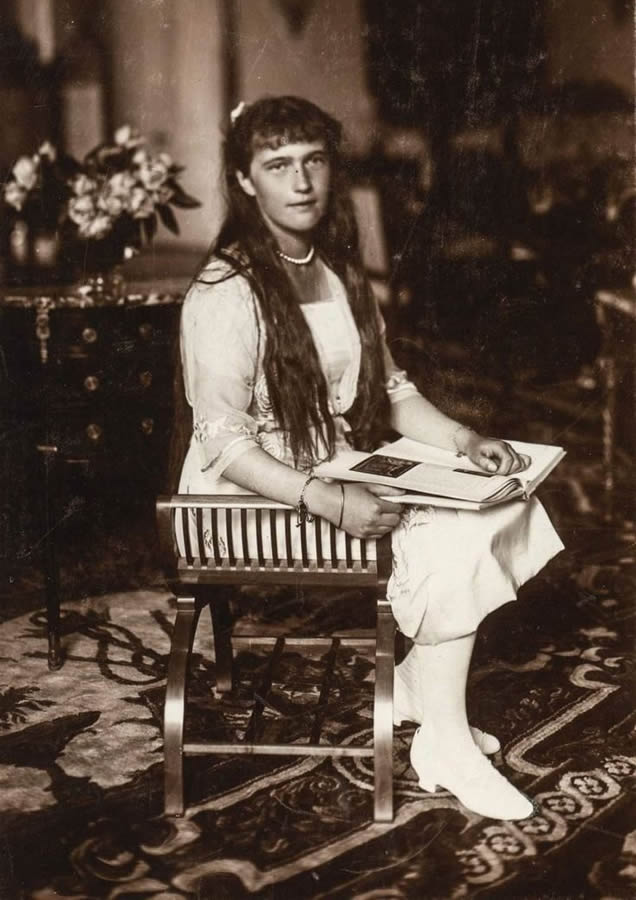
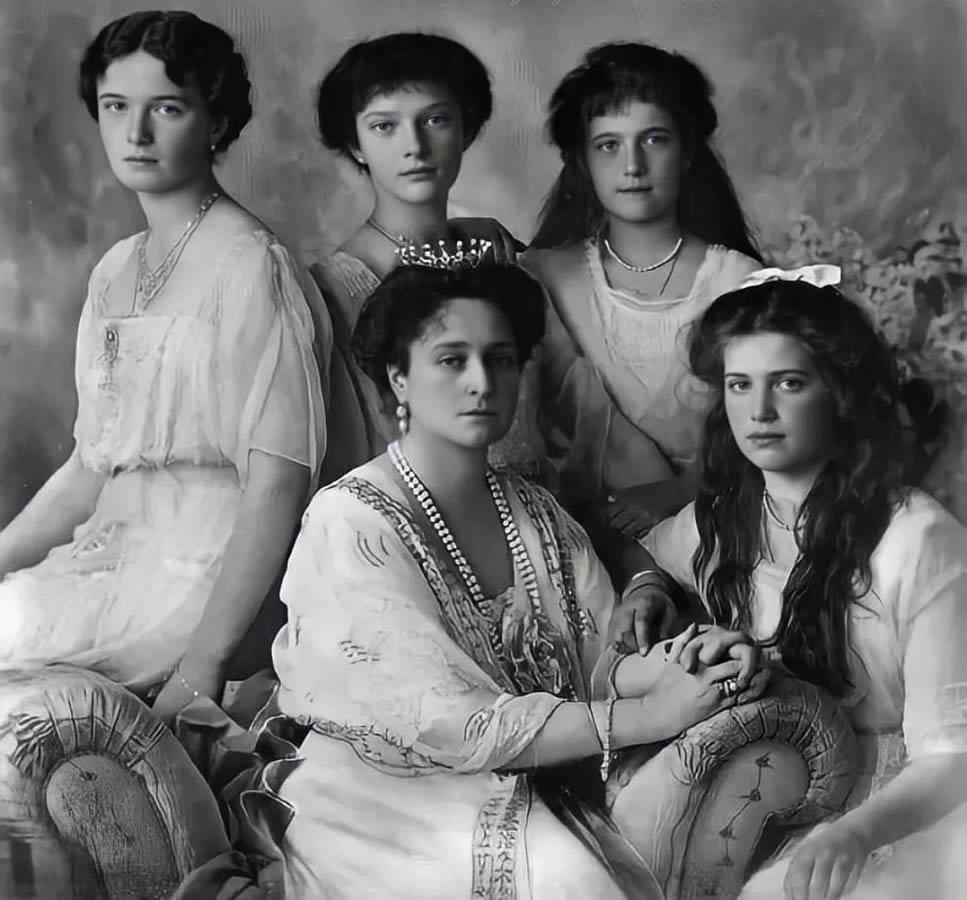
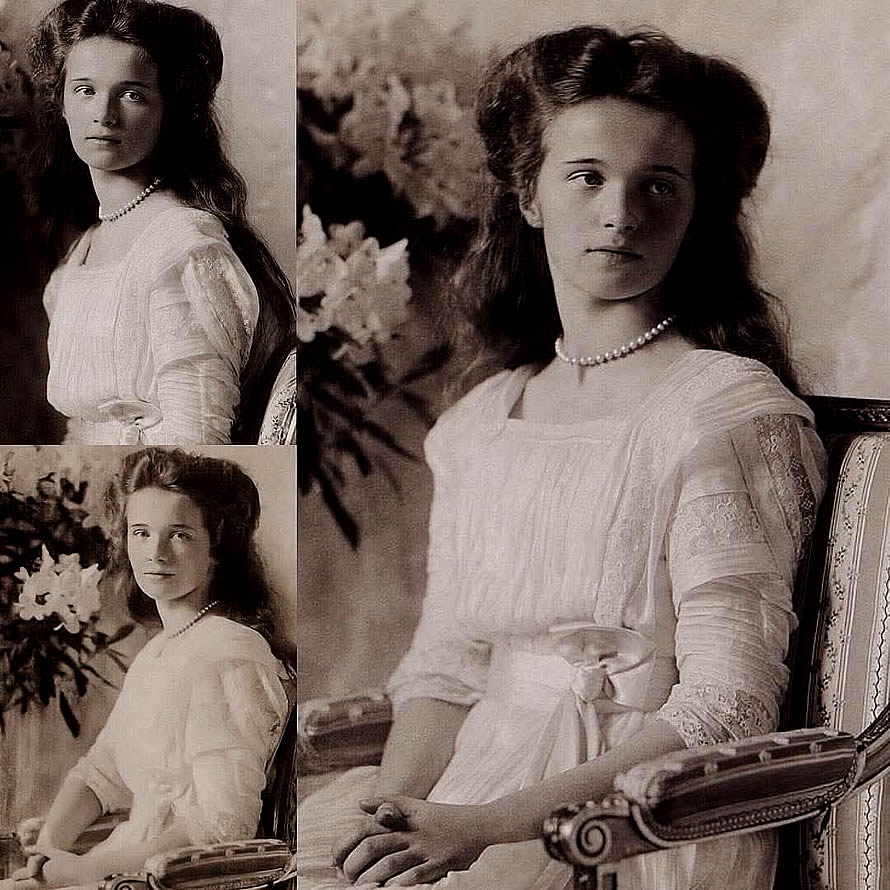
Olga, the eldest born on November 15, 1895, was the most literary of the four, fond of poetry and solitude, already prone to the melancholy that came from loving men she could never marry and carrying the invisible weight of being the first example her younger sisters were always watching. Tatiana, practical and graceful, was called the Governess by those who admired her natural authority, while warm-hearted Maria dreamed simply of children and a quiet life, and youngest Anastasia burned with an irrepressible energy that made the palace feel alive wherever she ran through it. By the summer of 1914, marriage negotiations for the older girls had already begun with European royal houses, but the assassination of Archduke Franz Ferdinand on June 28 of that year unraveled every plan, and when the First World War broke out in August, Olga and Tatiana traded thoughts of romance for Red Cross nursing aprons, tending wounded soldiers in the hospitals their mother had opened at Tsarskoye Selo, discovering in wards filled with suffering men something of the world their sheltered education had never shown them.
The photograph from 1914 preserves them as they were in those
last uncomplicated months, a family together, radiant with the
ordinary happiness that power and privilege had given them and
that history was already quietly preparing to take away forever.
|