 |
 |
 |
 |
 |
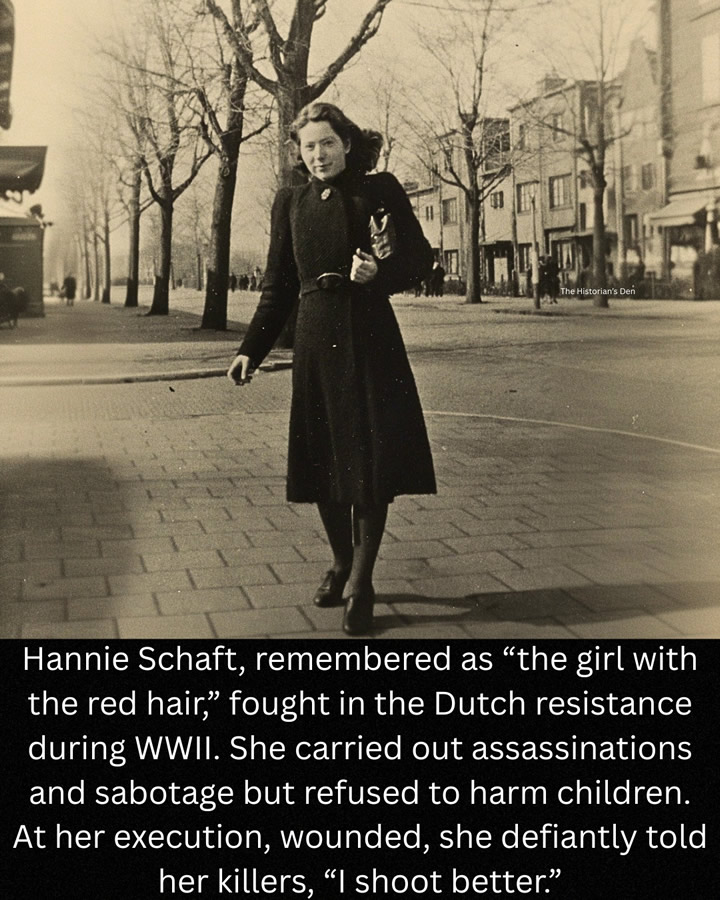
| In March 1945, Nazi soldiers stopped a young woman on a bicycle at a checkpoint in Haarlem, Holland. She wore thick glasses, and her hair was dyed black. In her bag were copies of a banned newspaper a quiet cover for something far more dangerous hidden underneath.
They took her in and questioned her for hours. When she gave them nothing, they moved to something harsher: solitary confinement, interrogation, and torture. Still, she said nothing about the people she worked with.
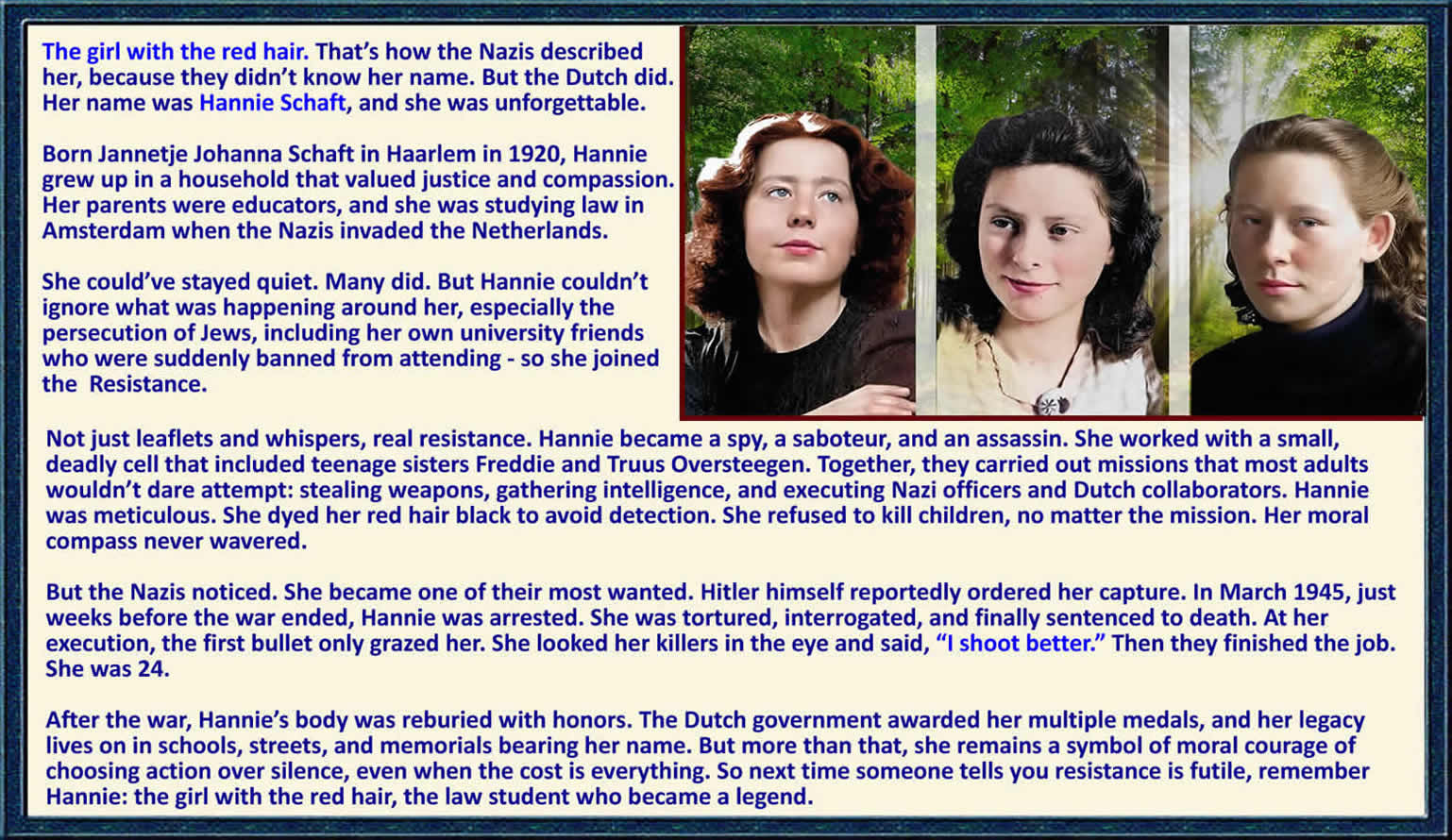
But bodies don't lie the way people can choose to. As the weeks passed in that cell, her roots grew out. Underneath the black dye, her hair was unmistakably red. The Nazis had spent nearly three years hunting a resistance fighter they knew only by that detail. Wanted posters across the occupied Netherlands described her the exact same way, over and over: the girl with the red hair. Now, she was sitting right in front of them. Her name was Hannie Schaft. Five years earlier, none of this would have seemed possible. Hannie was a law student in Amsterdam, quiet and serious, with dreams of becoming a human rights lawyer. Two of her closest friends at university were Jewish. When the Nazis occupied the Netherlands and demanded that every student sign a declaration of loyalty to the regime, Hannie refused. So did many of her classmates. It ended her formal education and the future she had been building toward.
She went home to Haarlem to look for another way to make a difference. During her work, she fell in love with a fellow fighter, Jan Bonekamp a resistance partner she trained and operated beside. In the summer of 1944, a joint mission went wrong. He was shot and captured, later dying in a hospital. The Nazis then went after her family, sending her parents to a concentration camp to force her out of hiding. The grief and guilt nearly broke her, but after her parents were eventually released, Hannie made her decision. She dyed her red hair black, put on glasses, and went right back to the fight. She lasted until that checkpoint in March 1945 just weeks before her country was liberated. On April 17, 1945, she was taken to the dunes near Bloemendaal (Overveen) and executed. She was just 24 years old. There is a famous story that the first shot only wounded her, leading her to tell her executioners: "I shoot better than you," but historians have found no proof of those words in wartime records. The line was added years later by a novelist telling her story. The documented truth needs no embellishment: she never gave up a single name. Not under torture, and not in the face of death. |
 |
 |
 |