 |
 |
|
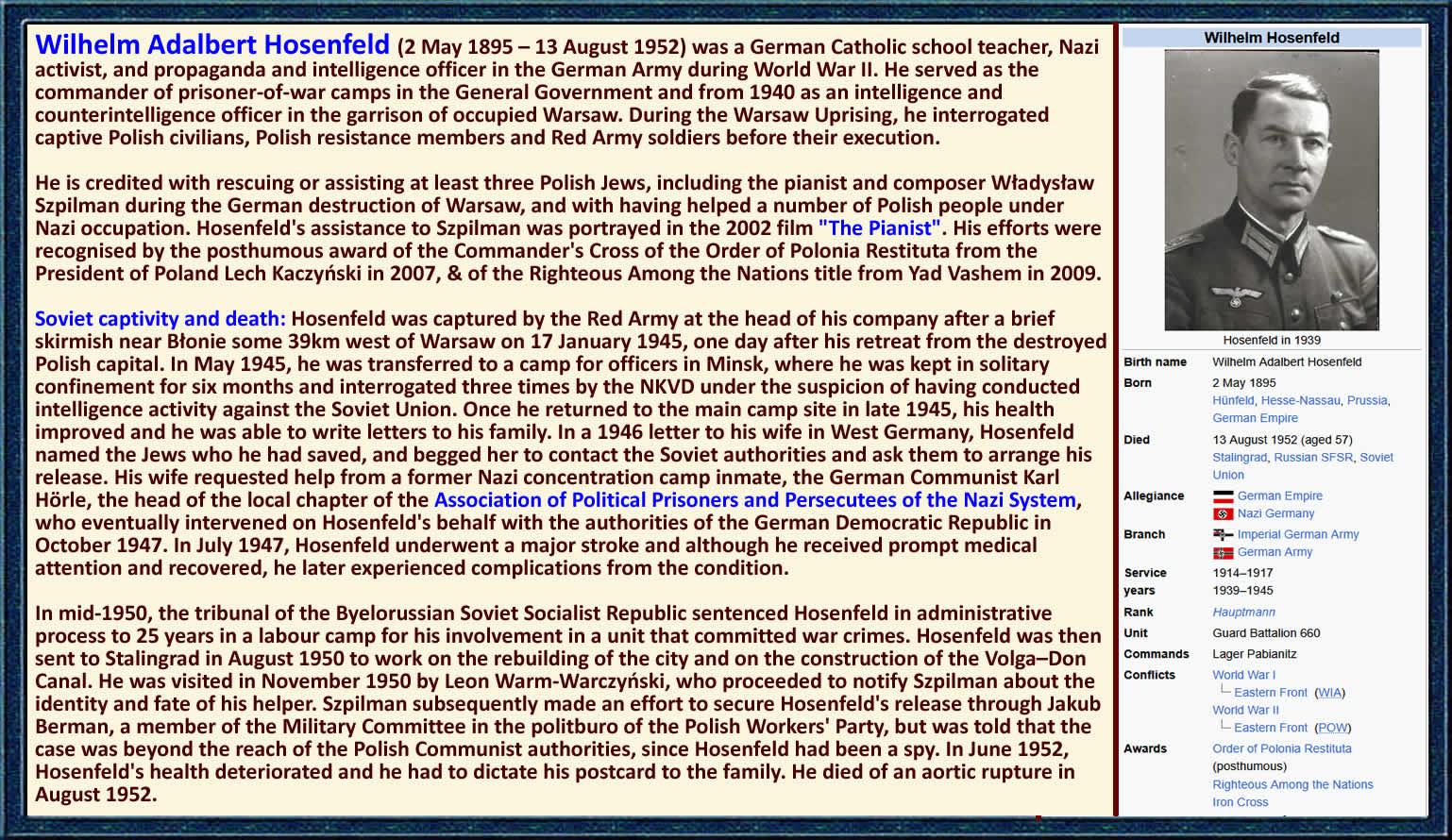
November 1944. Warsaw, Poland: a Nazi officer found a starving Jew hiding in ruins and asked what he did. "I am a pianist," the man whispered. What happened next became one of cinema's most unforgettable scenes—but the real story is even more heartbreaking. THE PIANO: The man's name was Wladyslaw Szpilman. Once, he'd been one of Poland's most celebrated pianists—performing in concert halls, broadcasting on radio, living a life of music and art. Now he was skeletal, lice-ridden, hunted like an animal. His fingers were frozen, weak from malnutrition; he could barely stand. But he sat at that ruined piano and began to play: Chopin Nocturne in C-sharp minor. The music drifted through the destroyed building, through the ashes of Warsaw, through the ruins of civilization. A German officer in Wehrmacht grey stood listening. A Polish Jew at a broken piano played. For a few minutes, the war disappeared. When the music ended, Hosenfeld made his decision. "I will help you survive." THE SECRET: What most people don't know—what the film "The Pianist" doesn't fully show—is that this wasn't Hosenfeld's first act of mercy; it was just the most famous one. Wilm Hosenfeld arrived in Warsaw in 1940. He was a schoolteacher from a small German village. He believed in duty, order, serving his country, but what he witnessed in occupied Warsaw shattered every illusion. He watched children shot for stealing bread. He saw families dragged from their homes in the middle of the night. He witnessed the systematic destruction of human dignity. And something inside him broke - not towards despair, towards rebellion. He began small: slipping food to starving families; l "losing" arrest warrants; allowing forged work permits to pass his desk. Then he became bolder. He walked the dark streets of Warsaw, knocking on doors, whispering warnings: "They're coming for you tonight. Leave now." He used his rank as a shield—hiding Jewish families in storage rooms, sabotaging the operations he was supposed to oversee. He was wearing the uniform of the enemy, but doing the work of a savior. By 1944, Hosenfeld had saved dozens of people - maybe more. The exact number will never be known. Most of them never learned his name. They just remembered: "a kind German officer who helped." And then he found Szpilman. THE SURVIVAL: After hearing Szpilman play, Hosenfeld returned regularly with food, water, blankets. He told Szpilman where Soviet troops were advancing, where it was safe to hide, how to survive until liberation. Szpilman was starving, freezing, hopeless. Hosenfeld kept him alive. In January 1945, as the Soviet Red Army closed in and German forces retreated, Hosenfeld came one last time. He gave Szpilman his coat—a German Wehrmacht coat to keep him warm. Then he disappeared into the war. Szpilman survived. He was liberated by Soviet forces, emaciated but alive. He lived because a German officer had chosen mercy over orders. THE INJUSTICE: In January 1945 the Soviets liberated Warsaw. They also captured German soldiers. Including Wilm Hosenfeld. The Soviets didn't see a man who'd spent years saving Jews. They saw a Wehrmacht officer: enemy, oppressor, Nazi. Hosenfeld was sent to a Soviet labor camp. Szpilman, desperate to repay the man who'd saved his life, tried everything to find him. He searched prisoner lists. He asked Soviet authorities. He begged for information. He couldn't locate him. The Soviets wouldn't release information about German POWs. Years passed. Szpilman kept searching. In 1950, Hosenfeld managed to smuggle out a letter through a released Polish prisoner. The letter reached Szpilman. Hosenfeld was alive - barely: imprisoned in a Soviet camp, sick, losing hope. Szpilman redoubled his efforts. He contacted everyone he could. He testified about Hosenfeld's character. He provided evidence. It didn't matter. On August 13, 1952, Wilm Hosenfeld died in Soviet captivity at the age of 57. The man who'd saved dozens of Jews died in a prison camp judged by his uniform, not his actions. THE SEARCH: Szpilman never stopped trying to honor the man who'd saved him. He wrote about him. He told his story. He fought for recognition. In 1958, he published his memoir: "The Pianist". He described the German officer who'd found him in ruins, asked him to play piano, and kept him alive. But even then, he didn't know Hosenfeld's full name. He'd never had the chance to thank him properly. Decades passed. Slowly, as records were declassified and survivors shared stories, the full picture of Wilm Hosenfeld emerged. He wasn't just the officer who'd saved Szpilman: he'd saved dozens of people. He'd spent four years conducting a secret war against the regime he was serving. His diary, recovered after his death, revealed his philosophy: "I want to be able to stand before God and say I helped when I could." In 2002, Roman Polanski directed the film adaptation of "The Pianist". The piano scene—Hosenfeld asking Szpilman to play—became one of cinema's most powerful moments. Millions of people watched a German officer save a Jewish pianist. But most never learned what happened to Hosenfeld after. THE RECOGNITION - July 19, 2009: Fifty-seven years after Wilm Hosenfeld died in a Soviet prison camp, Yad Vashem—Israel's Holocaust memorial—posthumously honored him as Righteous Among the Nations: the highest honor for non-Jews who saved Jewish lives during the Holocaust. His children, now elderly, accepted the honor on his behalf. Wladyslaw Szpilman had died in 2000—nine years before Hosenfeld was officially recognized. He'd spent 48 years trying to honor the man who'd saved him and never saw it happen. But the recognition came - late, but it came. Today, Hosenfeld's name is listed among the Righteous at Yad Vashem. His diary has been published. His story is taught in schools. The piano scene from "The Pianist" has been watched by millions. THE LESSON: Wilm Hosenfeld's story asks the hardest question: What do you do when you find yourself on the wrong side? He was a German soldier in Nazi-occupied Poland. He wore the uniform of the oppressor. He served in the Wehrmacht. And every day, he chose mercy over orders. He could have done nothing. Most did nothing. It was easier, safer. He could have embraced the ideology. Some did. It was rewarded. Instead, he risked his life—repeatedly, for years—to save people his government had condemned to death. He hid them, fed them, warned them, protected them. And when he was captured by the "liberators," they judged him by his uniform, not his conscience. He died in prison fifty-seven years before the world officially acknowledged that he was a hero. But here's what matters: Hosenfeld didn't do it for recognition. He did it to "stand before God" with a clear conscience. He died in a Soviet labor camp, but he died knowing he'd helped when he could. The Soviet guards who judged him by his uniform are forgotten. The German officers who embraced Nazi ideology are condemned by history. The schoolteacher who wore the wrong uniform but chose the right actions is honored as Righteous Among the Nations. Circumstance decides what we wear, but we decide who we are. |