The Babi Yar Massacre
In late September 1941, one of the most devastating mass killings of the Holocaust took place at Babi Yar, a ravine on the outskirts of Kyiv, Ukraine.
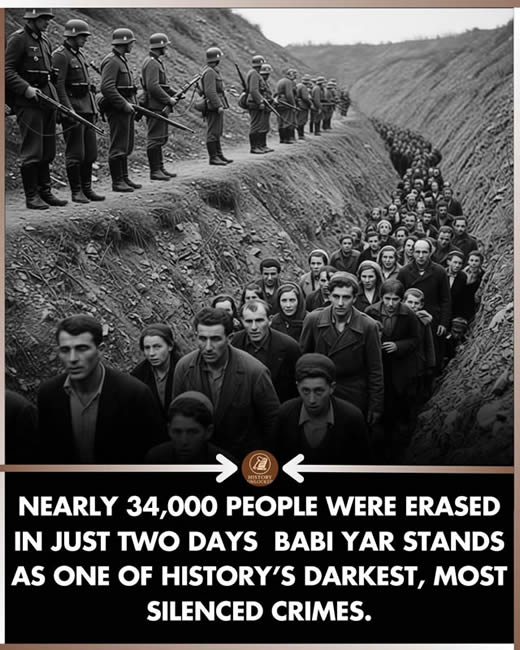
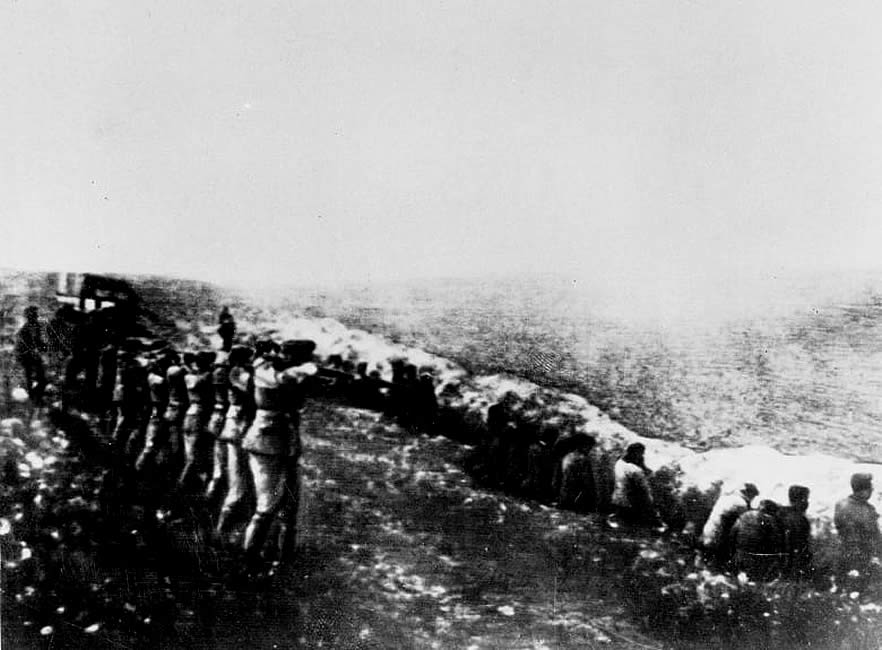
Over the course of two days, Nazi Einsatzgruppen, aided by local collaborators, rounded up nearly 34,000 Jewish men, women, and children. Under orders issued by the occupying authorities, Jewish residents were instructed to assemble, believing they were being relocated. Instead, they were marched to the ravine, stripped of their belongings, and murdered in a coordinated operation of mass execution.
The killings occurred with chilling efficiency and scale. Entire families were wiped out, and the ravine became a vast burial site. Babi Yar marked a turning point in Nazi policy in Eastern Europe - signaling the shift toward systematic mass shootings that would claim hundreds of thousands of lives across the occupied Soviet territories.
What made the massacre especially harrowing was its public nature. It took place near a major city, in an environment where the violence could not be fully hidden. Yet in the years that followed, Soviet authorities suppressed the specifically Jewish identity of the victims, framing the atrocity more broadly and denying full acknowledgment of its antisemitic intent.
Despite this suppression, Babi Yar endured in memory. Writers, poets, historians, and survivors preserved its truth, transforming it into a lasting symbol of both Nazi brutality and the dangers of silence and complicity.
Today, Babi Yar stands as a reminder of how quickly human lives can be erased when hatred is organized, normalized, and enforced by power—and of the responsibility to remember, name, and confront such crimes so they are never repeated.
|